Previous Page

Home


Leaving Patagonia

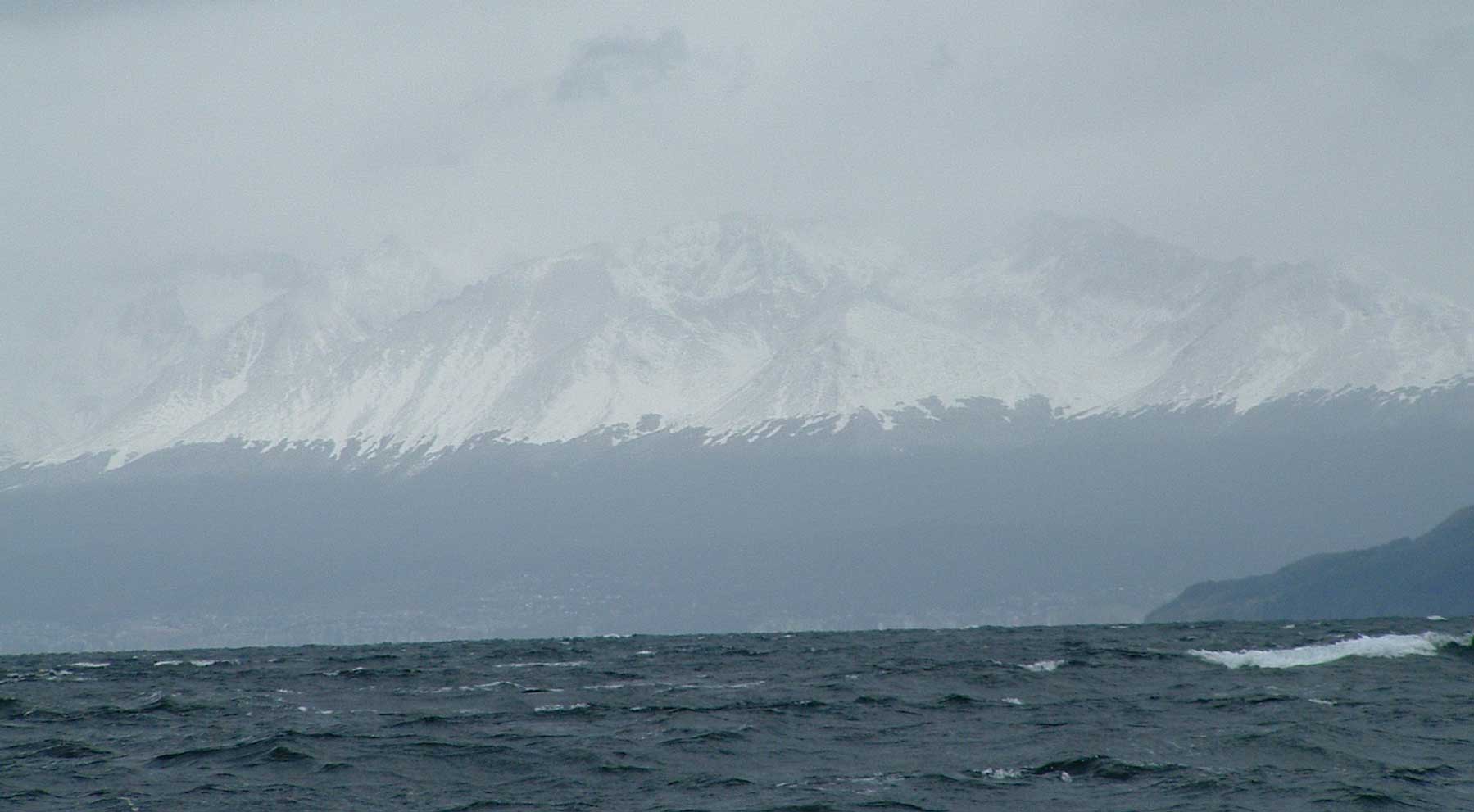
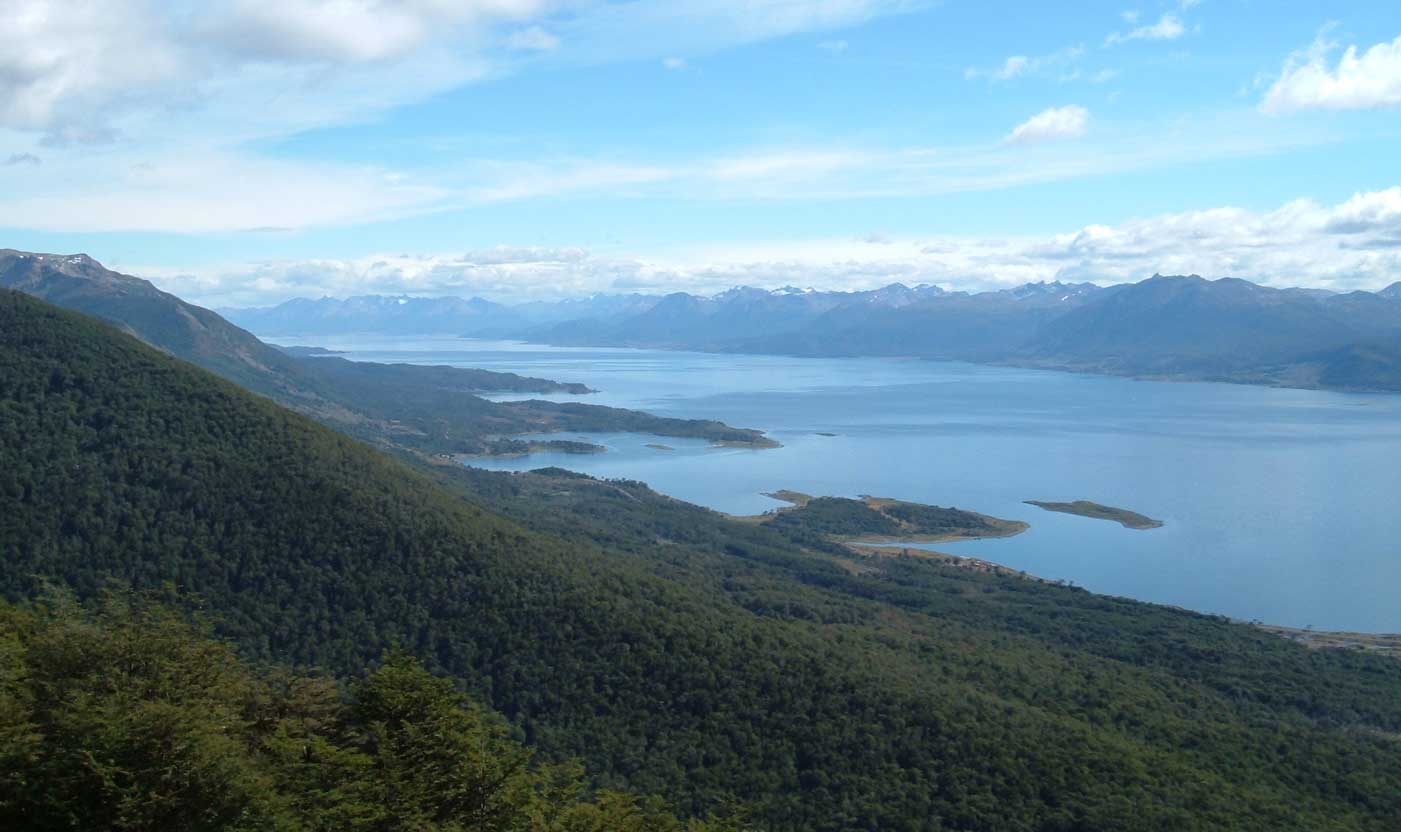
Our trip to the Horn was our last 'must do' in Patagonia, but there were still a lot of socialising and restocking to catch up on. Fortunately we had quite a long spell of pleasant weather and managed to take a hike above Puerto Williams to take in the view back West along the Beagle Channel. A few days later we headed that way in order to get to Ushuaia in Argentina. This is the major centre in the far south. It is an important tourist town and large enough to have the kind of resources that tiny Puerto Williams lacks. Unfortunately it is almost always at least a fresh beat from the latter to the former and though the distance is only 30 miles, they seem to be jinxed, as cruiser after cruiser had mishaps of one kind or another in making this short trip. We were no exception. Kevin on Sapphire had mentioned that we seemed to have a lot of smoke or steam coming from our exhaust on the trip to the Horn. We had dismissed this as a symptom which had been present for months if not years. However, on the trip to Ushuaia, the cooling water alarm went off about half way and it was clear that virtually no water was getting through. This gave us an excellent opportunity to practice our skills at picking up a mooring buoy under sail in 25-30 knots of wind. Upon a full inspection of the cooling water path through the engine it became clear that the path in was perfectly clear. However, despite an earlier cleaning of the injection elbow, the actual injection point itself was almost completely blocked. The moment this was cleared, the problem was solved.
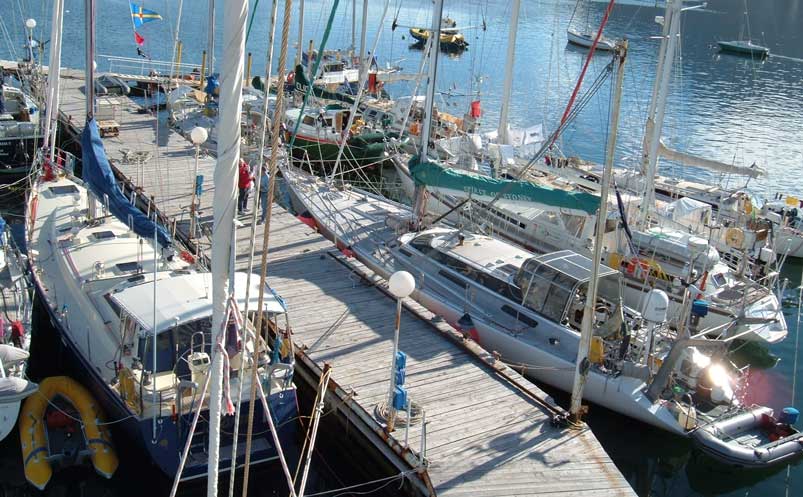


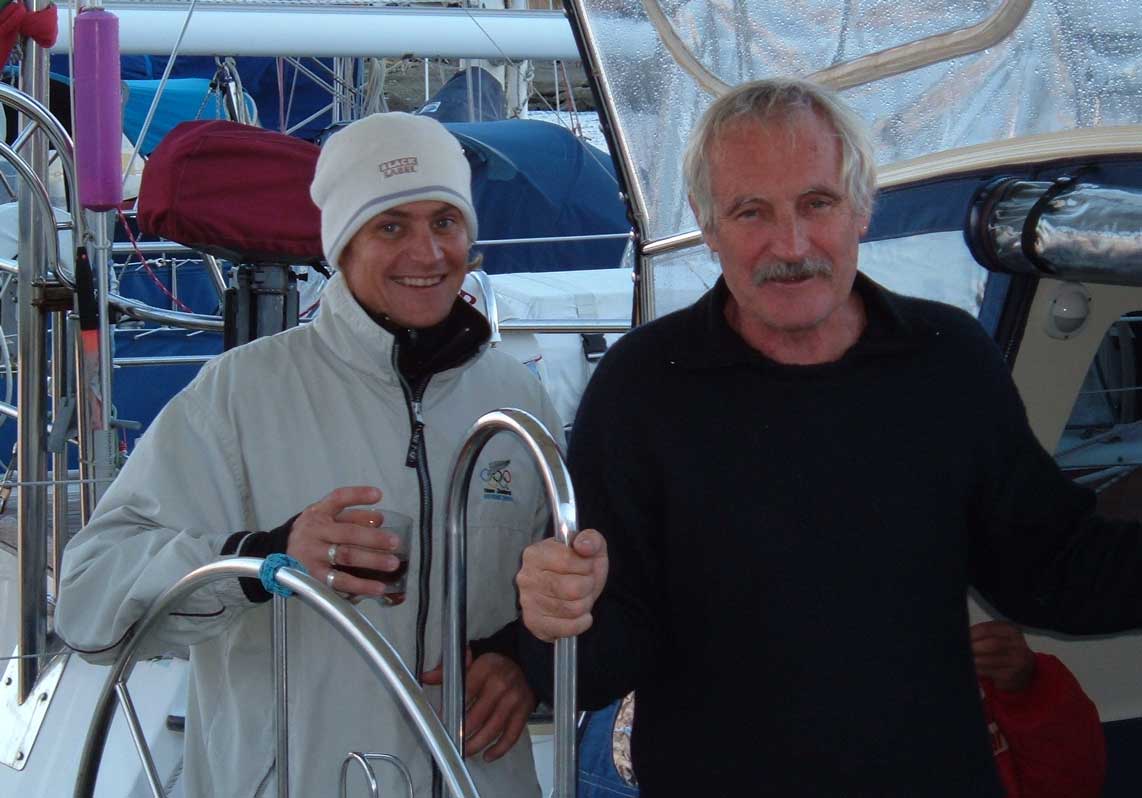
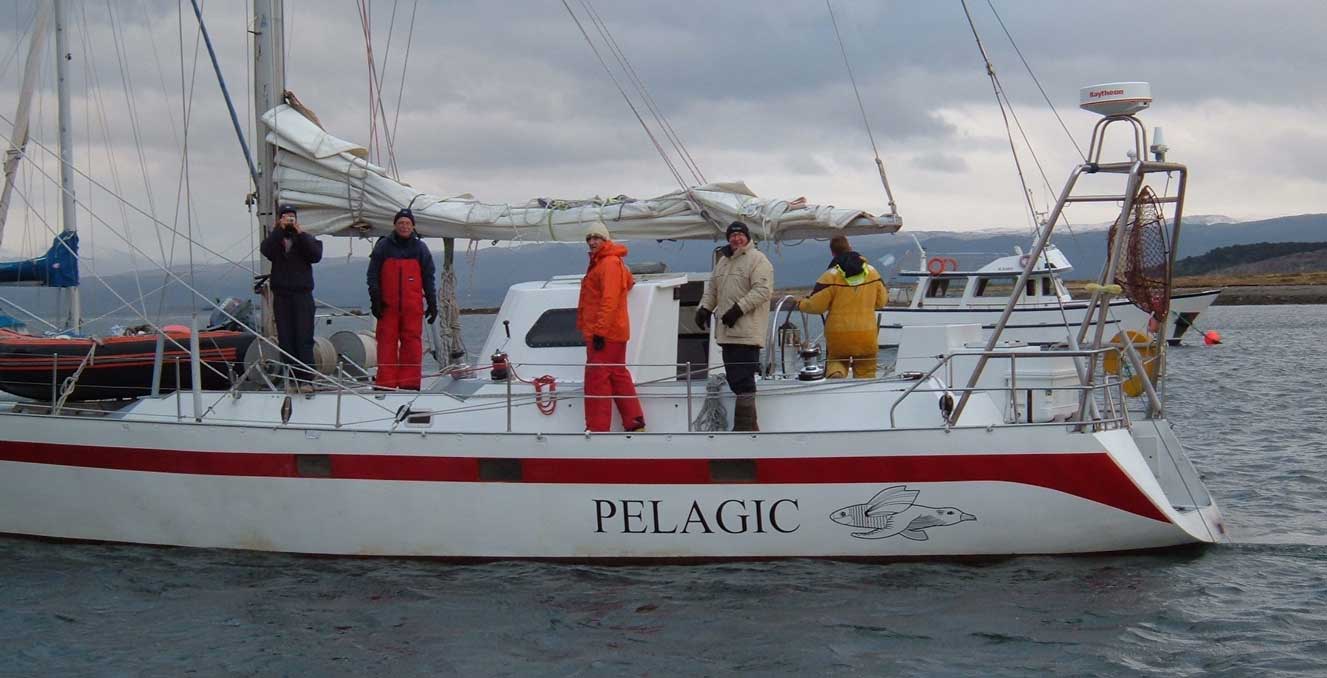
During the summer season, Ushuaia is always crowded with cruisers and charter boats, large and small. Most of these try to find room along the dock of the AFASYN, a club whose origin in kyaking and canoeing is now almost forgotten. Given the volatile weather in the Beagle Channel, being moored to this dock can be an unpleasant experience, especially if you are the fifth or sixth boat out. There is also constant movement, with charter boats in particular heading in or out. Fortunately our week in Ushuaia was fairly quiet. We stocked up and Vicky had her hip re-xrayed. We managed a hike up to the glacier above the town. However, it was the crossroads nature of Ushuaia that made up for any problems with the mooring arrangements. Having spoken on the radio, we caught up with Malcolm and Hamish Dickson, following their marathon passage from Hobart and rounding of the Horn. More astonishing still, we were summoned on deck during breakfast on our first day by a hail from the old Pelagic, which was circling round us at our mooring. It turned out to be our Aussie friend David Kellett, who we had not seen since Sydney, on a jaunt to the Beagle and the Horn with several Aussie friends. In addition, there enough OCC members and other cruisers to make a party well worthwhile. In Argentinian style, good carnivorous appetites were in demand in order to do away with a whole lamb and what seemed like a side of beef. The fact that Ushuaia is a free port, at which even quality Champagne can be had for $6 a bottle kept beveridges flowing freely.


Having exhausted ourselves socially, we headed back to Puerto Williams for our final few days in Patagonia and to wait for a window to head for the Straits of Le Maire, the entrance to the South Atlantic. With snow decorating the top of the mountains either side of the Beagle Channel, it was increasingly clear that summer was over and it was time to head north or hunker down for the winter, as several of our cruising friends planned to do. However, we had made one as yet unfulfilled promise - to Sunstone. 2005 is the year of her big 40, as she was launched in the Spring of 1965. An impromtu party crammed 14 fellow cruisers into Sunstone's saloon to celebrate. Sunstone has carried us about 125,000 cruising and racing miles and many thousands of miles for her previous three owners. She has also been our home for 24 years, the longest either of us has ever lived in 'one place'! We like to think she enjoyed the celebration.


Cruising the Chilean Channels had been one of our long-term goals for many years. The cruise lived up to our high expectations in many ways. Both the scenery and the wildlife (see next page) were spectacular. The weather was volatile, often wet and occasionally wild. The sailing was challenging and the anchoring/mooring even more so. Having been in a cruiser 'training' area, like Mexico, quite recently, it was good to be mostly among other experienced cruisers with whom it was possible to trade information, experience and techniques, knowing that these were based on long and solid experience, not just theory.


There were one or two surprises. Kelp was not the kind of problem we had been led to believe. At least the kelp was no more of a problem than in other similar areas, the West Coast of Scotland, Alaska or the Queen Charlotte Islands. We had experienced heavy williwaws in Alaska and Fiordland, but those in the anchorages of the Straits of Magellan were at least as bad or worse, while those which race through some of the Canales are potentially the most dangerous we have seen. However, we had no problems with anchoring. This may be partly because we hardly ever trusted to a single anchor. When we began the cruise we added a short length of 1/2 inch chain between our 45 pound CQR and our usual 3/8 inch high test chain. This added weight seemed to add holding power to the anchor and to its ability to get down through kelp to set in the mud beneath. We often used our Bahamian moor, particularly where the anchorage was prone to rachas (williwaws) from many directions and where it was difficult or impossible to use shore lines. This proved effective and we never dragged, even in anchorages where others did. We did a lot less motoring than we had been led to expect. Perhaps this was because we were headed south during the summer season, when the winds are predominantly NW. As a result we often moved between anchorages when the winds were 30+ knots, but from astern. As a result, fearing nasty gybes, our mainsail saw little use and we often ran under jib alone. The only major challenge in these conditions was getting the boat off and on to anchor.

We must add here several words of thanks to cruisers who have spent time and effort to pass on hard-won knowledge of the area. When the Roths cruised the area in the late 70's, there were few other cruisers and little or no yacht-specific information, only that in the Pilots. Though there are still fewer than 25 boats a season who cruise through the Canales, it is now busy and well documented compared to 30 years ago. While in Canada, we first spoke to and gained information from Coryn and Tony Gooch, who were major contributors to the first edition of the RCC guide for the Canales. When we arrived in Chile, we then benefited from the experience of Ian and Maggy Staples, the other authors of that guide. More recently, the 'Italian' guide, written by Giorgio and Mariolina Ardrizzi and based on their very extensive experience, has added wonderfully to the detailed information available about Patagonia. The other major source of information and security for cruisers in this area is the morning Patagonian Cruiser Net, currently expertly run by Wolfgang of Wilde Mathilde. There are local cruisers nets everywhere in the world, but perhaps the two most necessary of which we are aware, are those in Patagonia and Bluff Fisherman's Radio in southern New Zealand. These areas have wild weather and are unpopulated, with few ports of refuge or places where repairs can be made. Cruisers who come to these areas are very self-reliant, but also very willing and able to help others who have problems. Though cruising in Patagonia is still a real challenge for any cruiser, thanks to these people and others, it has been made much easier.


Finally we would like to say, as so many other cruisers have, how helpful, polite and even charming were the personnel of the Chilean Armada. This was true of all the Chileans we met, but Chilean officials are notably some of the most pleasant to deal with anywhere in the world. They could certainly run a charm school for a few of those in the Caribbean! Though the reporting regime can seem something of a burden at times, the use of on board email has made this much easier. The Armada is highly efficient and provides an excellent weather service, one of the best in the world, with excellent weatherfax, navtex and voice services. In addition, the Chilean Hydrographic Services Chart Atlas must be one of the best deals going in chart information, giving reduced sized versions of every Chilean chart for $120. Though initially daunting to middle-aged eyes, these proved perfectly usable with a good, illuminated magnifier. A page of all our Chilean anchorages with positions and comments will be added - soon.


Next Page