Previous Page


The Horn


As so often, the weather changed our plans. In this case it was an outbreak of slack pressure and light winds. A close look at the weather fax the morning after our arrival confirmed what we guessed the evening before, that we probably had a two day window to dart around the Horn and back to shelter before the next spell of stronger winds came through. We conferred quickly with Kevin and Teresa of Sapphire, another OCC boat which had come in from the Atlantic side. They were also keen to use the good weather for their excursion to the Horn. By early afternoon we were on our way.

There are problems with visiting Cape Horn as an excursion rather than doing a proper rounding as part of a passage. For reasons of safety, the Armada carefully controls the movements of boats heading to the Horn. You must get a special Zarpe, which specifies the anchorages and routes which you may use. In fact, there are relatively few good anchorages in the islands near the Horn and only one, quite small one, Maxwell, which gives any protection from easterlies. What is more there are not even any good anchorages nearer the Beagle Channel which give good easterly protection. During the summer season there is also quite a lot of charter boat traffic around the Horn area, so these anchorages are heavily used, which creates problems during the frequent periods of heavy weather. Though the charter boats continue to operate to fixed schedules almost no matter what the weather, settled weather windows in the area rarely last more than two days. The normal schedule for doing an excursion to the Horn takes four days.

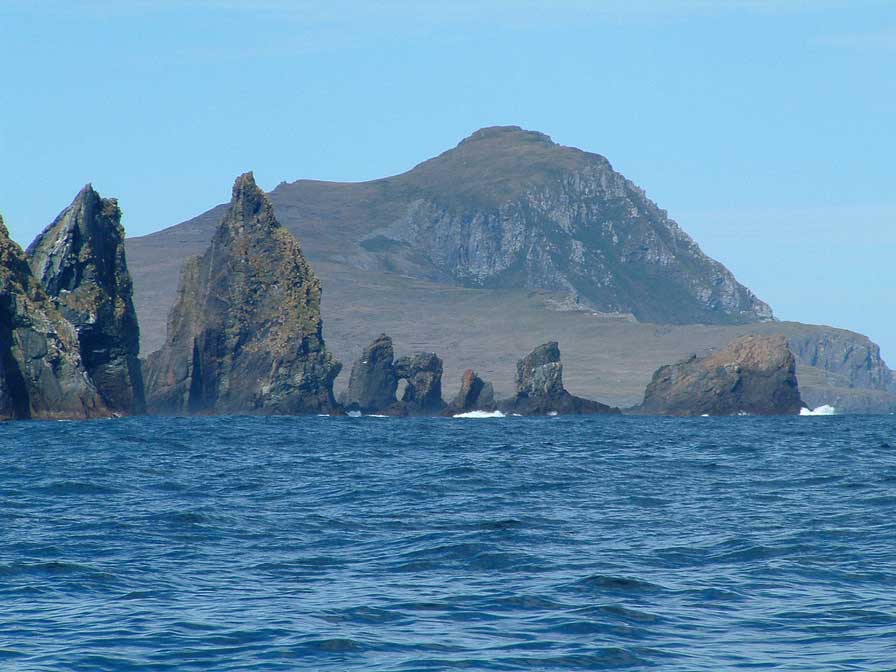
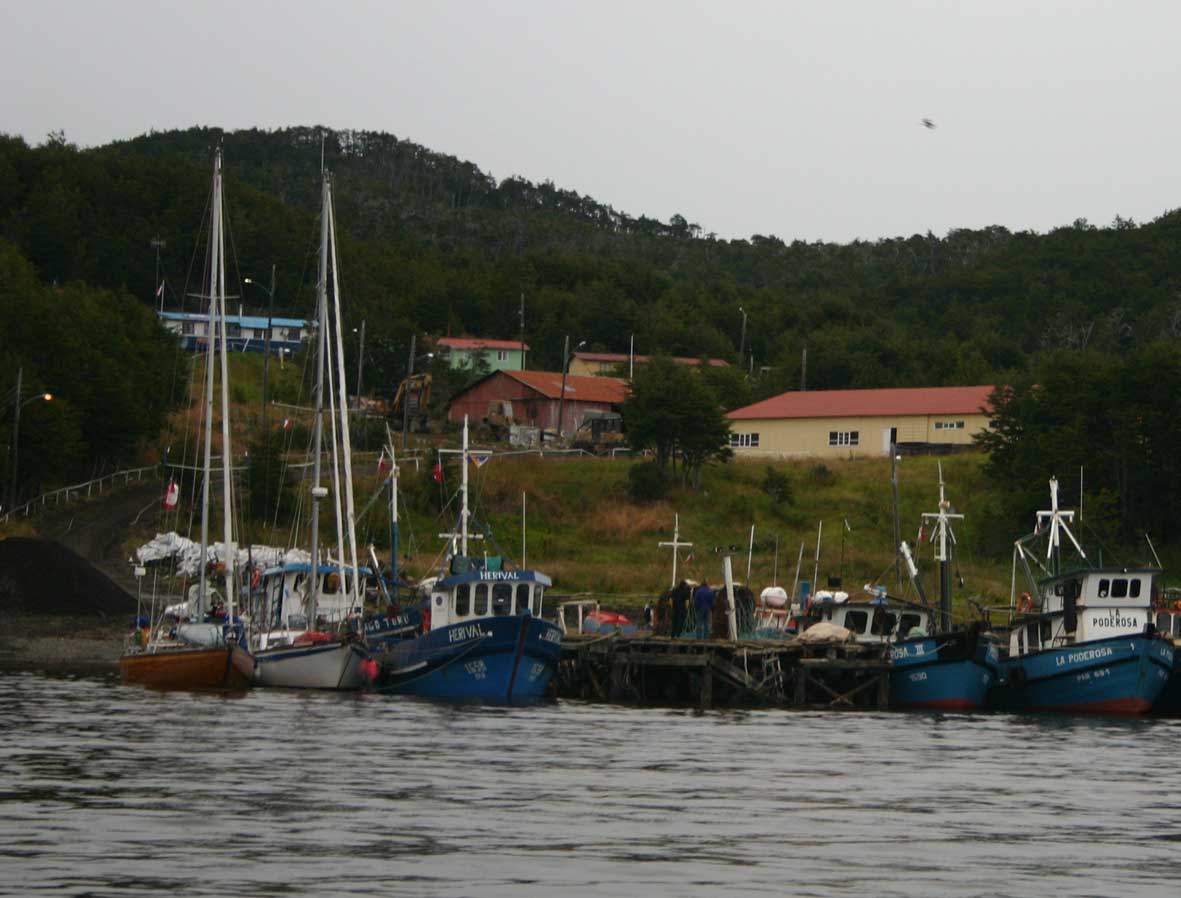
For all these reasons, we decided that once we made the short hop to Puerto Toro, only 25 miles from Puerto Williams, we would then make our trip to the Horn in a single long day. We would anchor at Martial for the night and make the trip back the following day, probably to Toro, but perhaps even to Puerto Williams. Fortunately, at Toro, the helpful Armada alcamar let us tie up to the dock, which speeded our 0400 departure. A long morning's motoring over calm seas, under bright blue skies took us across the normally turbulent Bahia Nassau and into the channels among the Islas Woolaston, where the Roths nearly lost Whisper back in the 70's. By mid-afternoon, both we and Sapphire had the craggy western coast of Isla Hornos in sight. In fact, that coast, which is not much catalogued in photos, is much more dramatic than Cabo de Hornos itself.
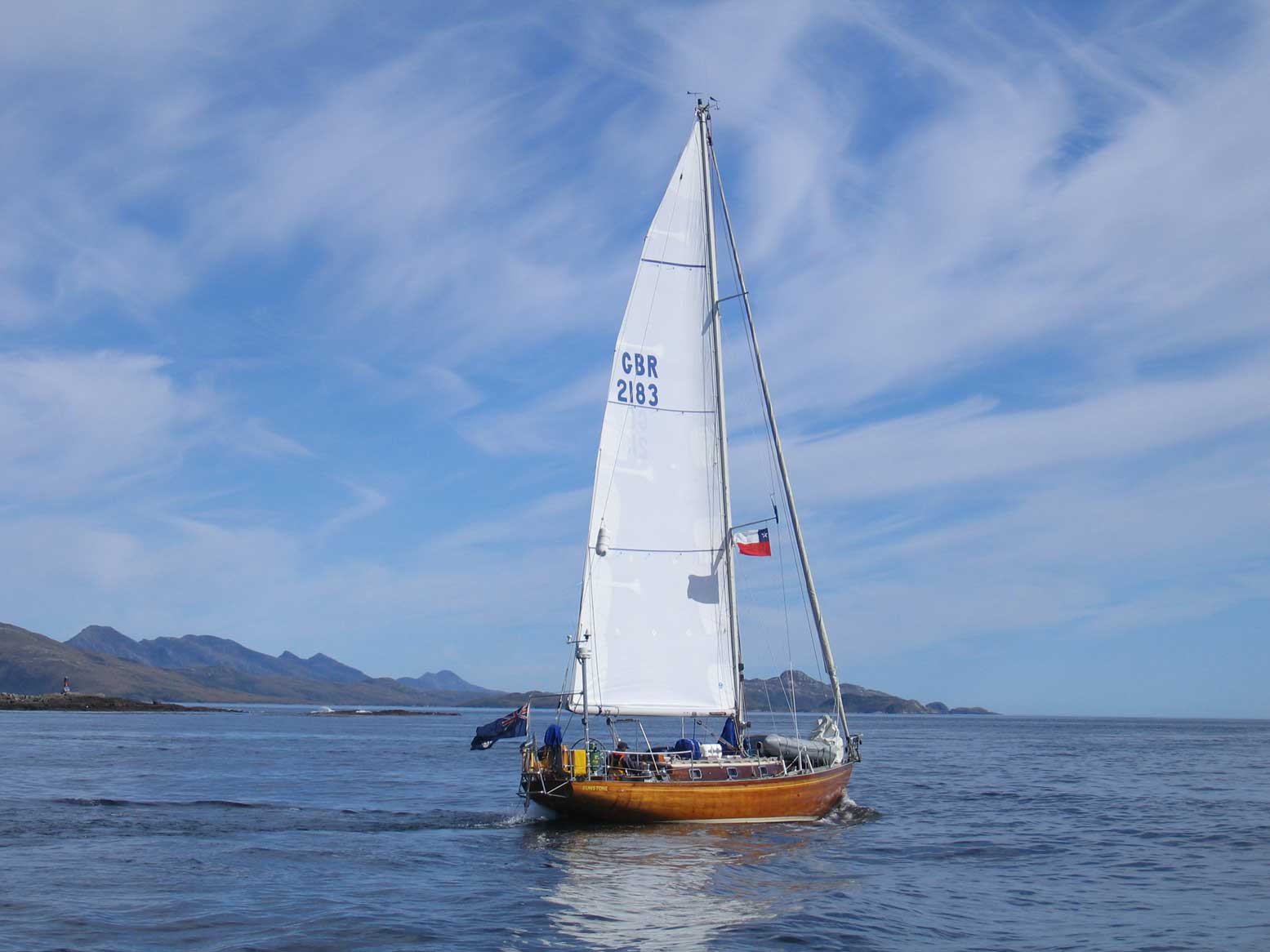
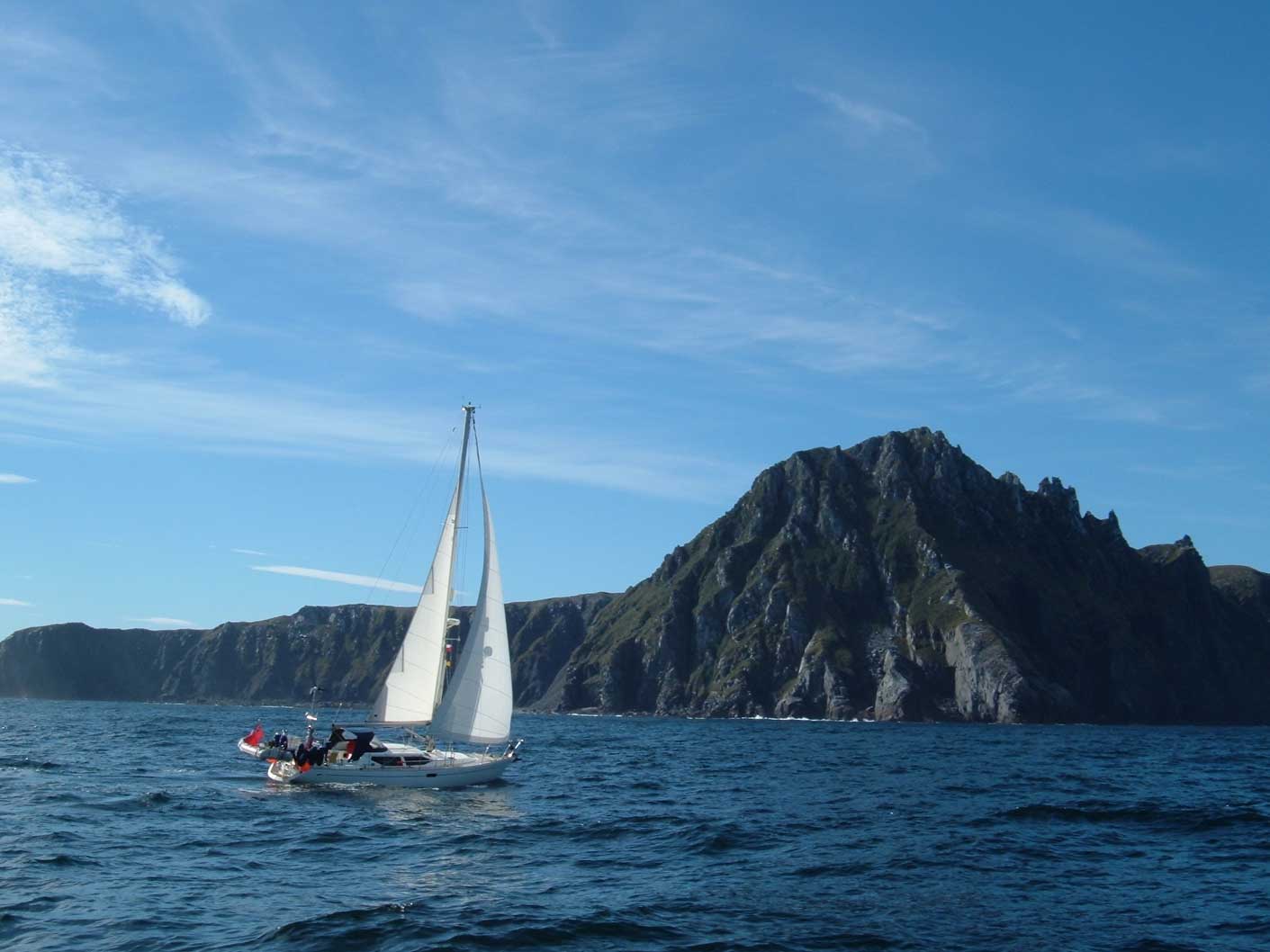
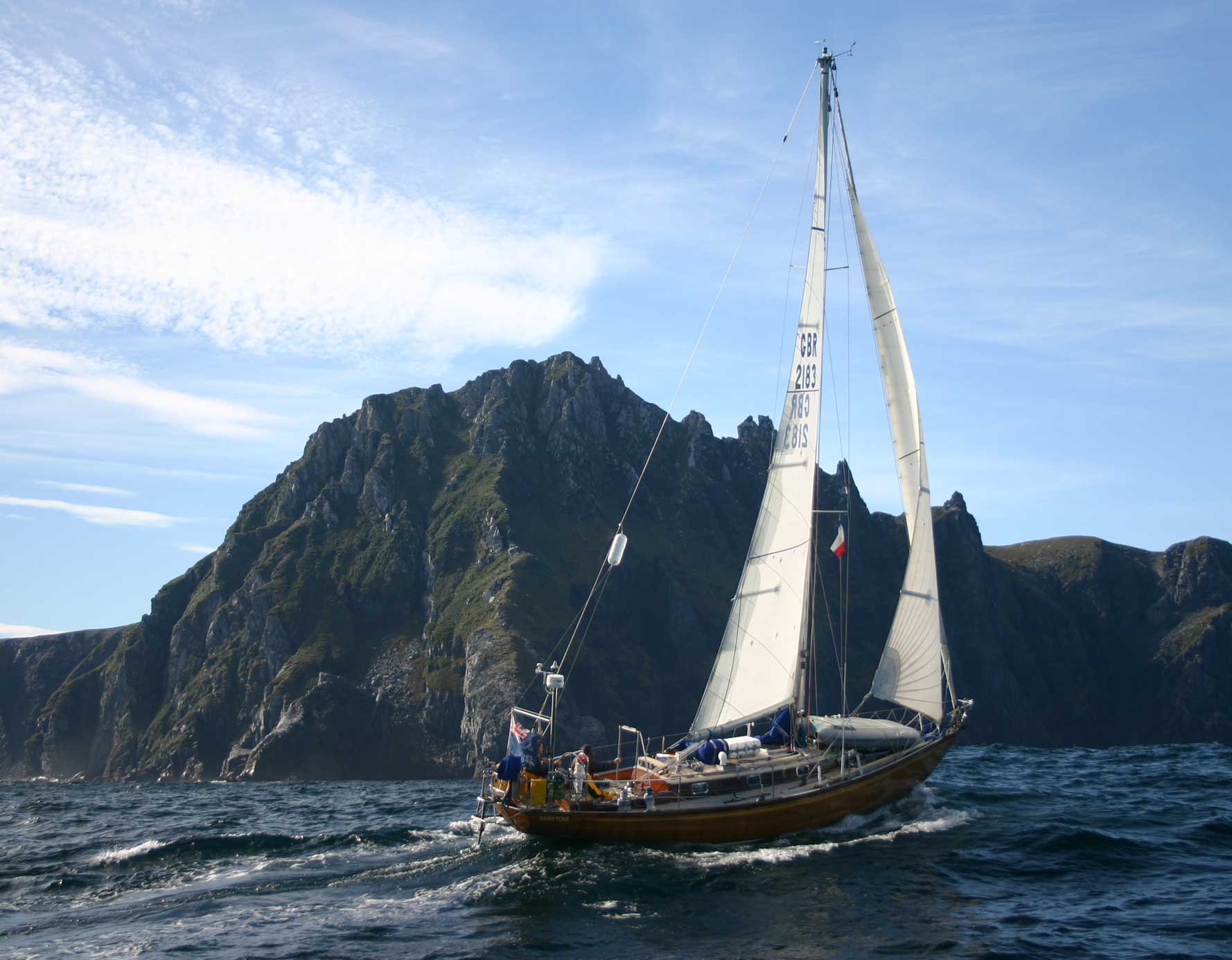
There was only a low SW swell running and a pleasant northerly breeze kicked in as we approached the Cape, so that we could make a proper sailing rounding. In such easy conditions we could safely round fairly close to. Photos we had seen of the Horn were mostly taken from much further away, so we had imagined the Cape to be a fairly low, rounded promontory. In fact it is quite a high, craggy cliff, more colourful and varied in texture than the photos mode it appear. The gentle conditions also made for perfect mutual photo opportunities with Sapphire and we were thankful for digital cameras, which meant that we needn't stint the number of shots we took. We rounded at 1540, 1 March, close enough to make out the famous Albatross fretwork sculpture near the lighthouse.


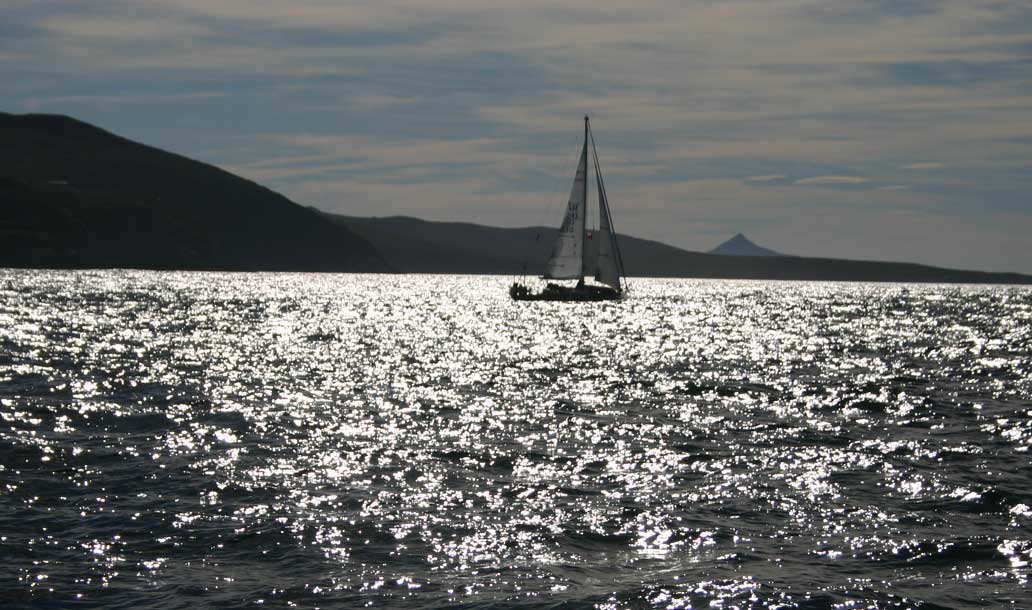
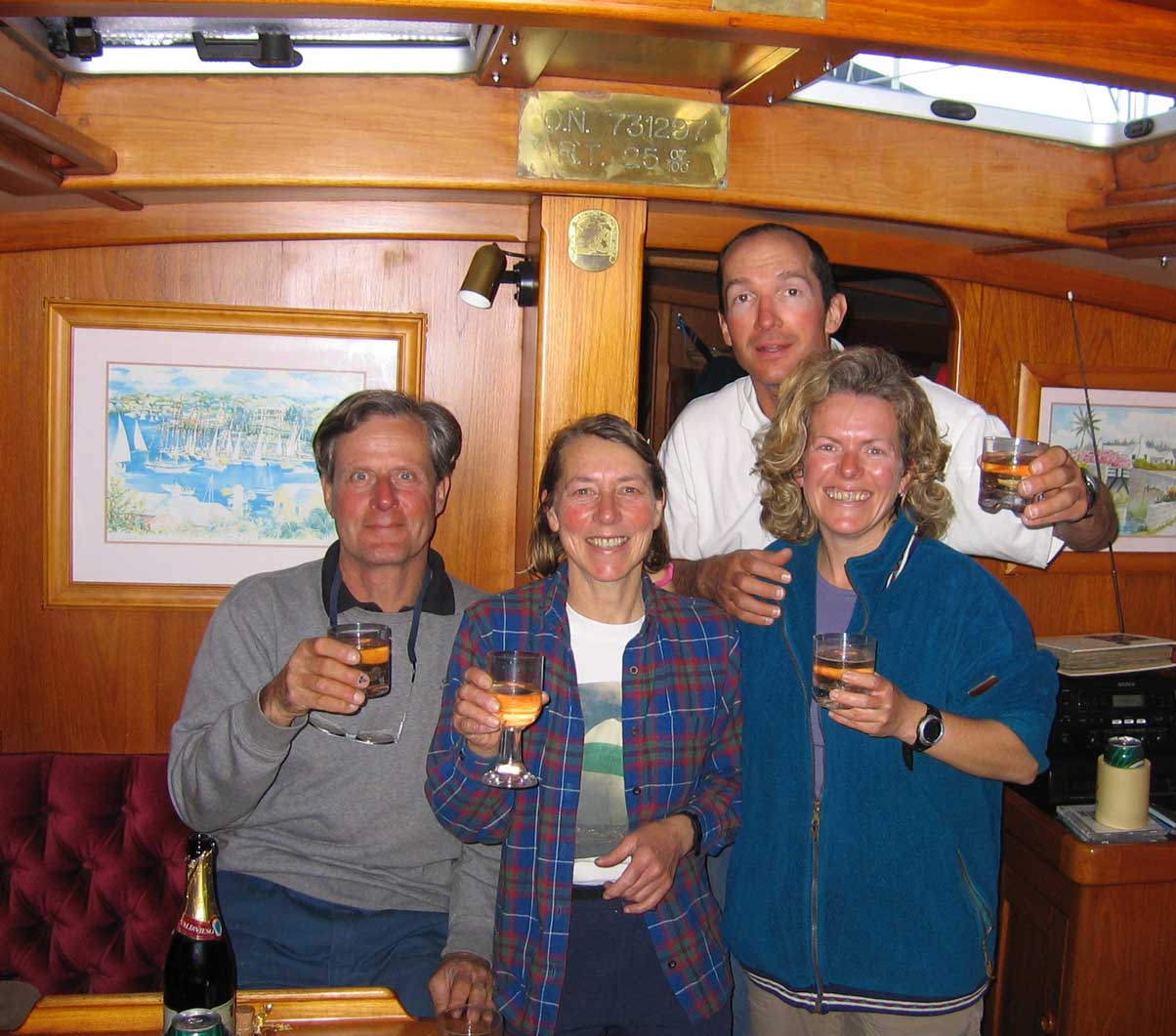
The period after the rounding might have been an anti-climax, except that we had a delightful beat back up toward Caleta Martial over seas that shimmered in late afternoon sun. As the wind died, we motored into the anchorage accompanied by a family of dolphins clearly visible through the calm, clear water. We exchanged mutual congratulations with Kevin and Teresa and readied ourselves for a dawn departure and another long day.

A brisk SWly saw us away from the Woolastons the following morning, but this soon turned Nely and just strong enough to force us to sail as well as motor. The further north we went the further the wind veered and it was soon clear that Toro would be a very uncomfortable spot to spend the night. On the other hand, the easterly wind would give us a nice run back up to Puerto Williams if we took it - so we did. We arrived back to a crowded Micalvi just after 1800 and were immediately absorbed into a friendly party aboard Belair.


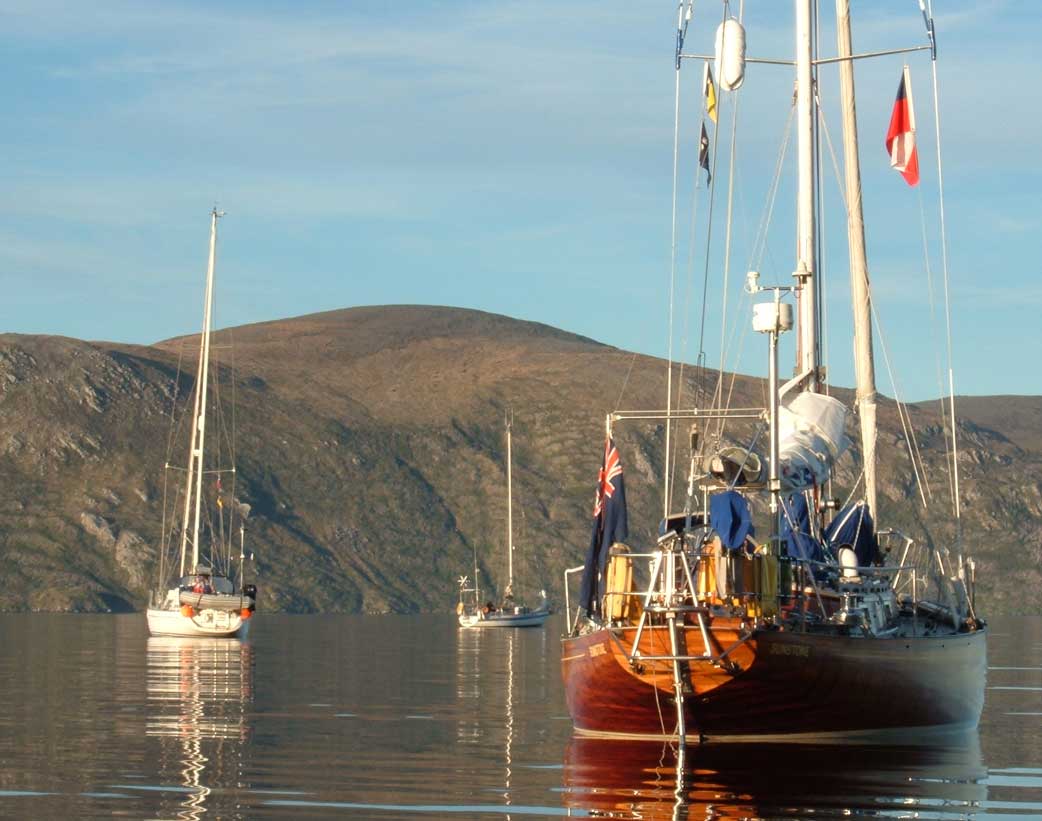
Our little excursion was no more than that. Though we have now rounded three of the five southern capes, our little day - or in some cases night - sails have nothing in common with the proper roundings by other more adventurous sailors. Among these are two, who have made roundings while we have been in the area. Malcolm Dickson and his son, Hamish, rounded, having made a passage from Hobart, Tasmania. We were delighted to speak to them and see them again, having last met in Nelson, NZ, where we re-teaked Sunstone's decks in Malcolm's yard. At least as great a feat was accomplished by Alex Whitworth, in the 10 m Berrimilla, also going from Hobart and continuing on to Stanley. Though our little sail could not compare to theirs, nevertheless, we enjoyed seeing the great cape at its best - if not at its most typical.


Next